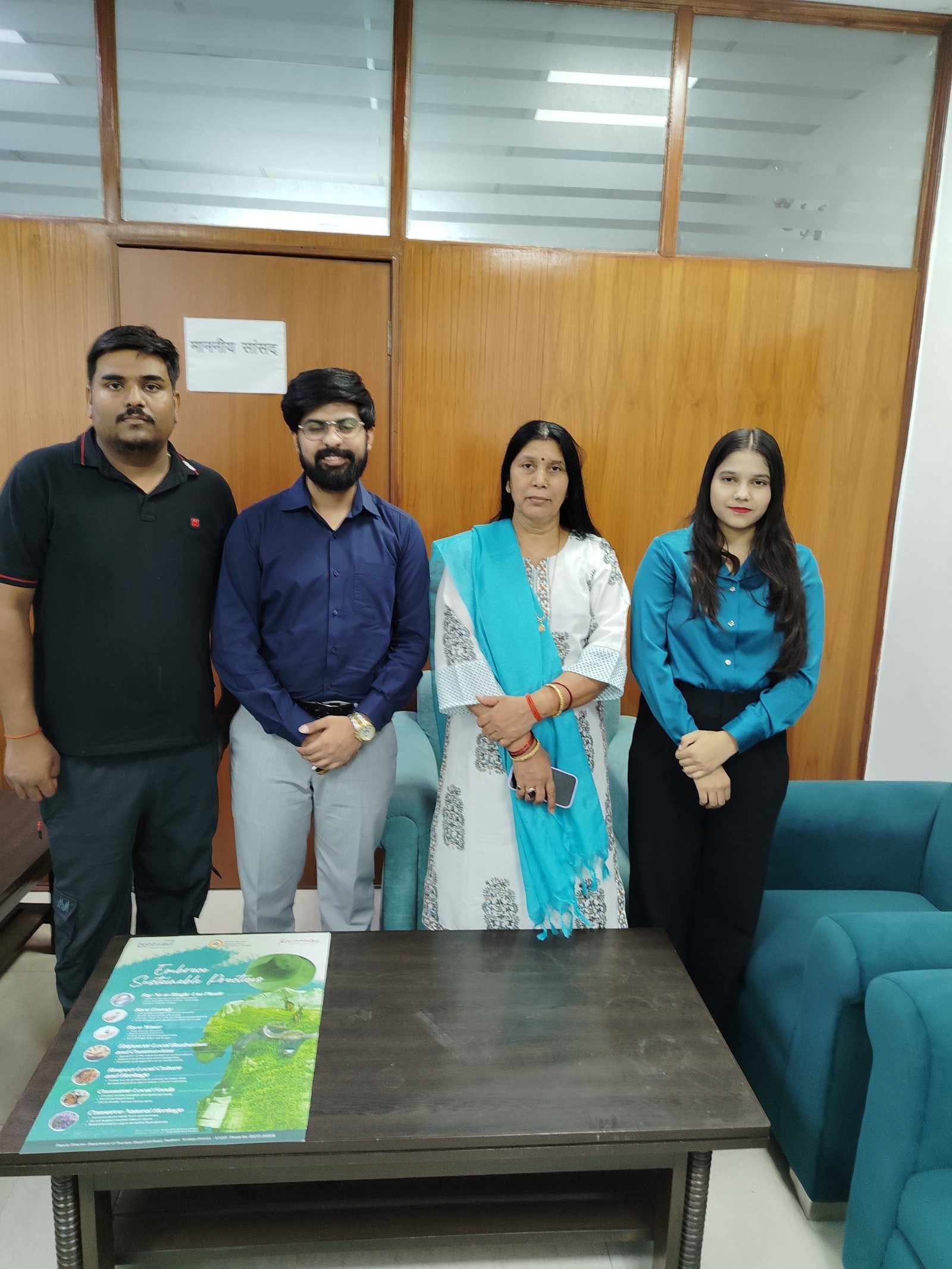


Meeting with Pushpendra Saroj, Member of Parliament (Kaushambi)
October 21, 2026



 By
user
Starting a business involves more than developing a great idea. Entrepreneurs must understand their target audience, define their services, establish a recognizable brand, and create a strategy for reaching potential customers. In today’s digital environment, one of the most important steps in this journey is building a professional website.
A website gives a startup a dedicated platform to introduce its business, explain its offerings, communicate its values, and connect with potential customers. It can also support marketing activities, generate enquiries, and provide a foundation for future expansion.
However, launching a successful website requires more than choosing a template and publishing a few pages. It involves planning, research, design, development, content creation, and continuous improvement.
ReadyCoder Private Limited helps startups and businesses turn ideas into practical digital solutions through website development, digital marketing, and technology-driven services.
Before starting website development, entrepreneurs should clearly understand what they want their website to accomplish.
Different startups have different objectives. An online service provider may want to generate enquiries, while a technology startup may need to explain its product. An e-commerce business may focus on online sales, whereas a consultancy may prioritize professional credibility and client communication.
Defining the primary objective helps guide decisions about website structure, content, functionality, and design.
Start by answering a few important questions:
These answers form the foundation of your website strategy. When the purpose is clear from the beginning, it becomes easier to prioritize features and avoid unnecessary development costs.
A startup website should be designed around the needs of its intended audience rather than the personal preferences of its founders alone.
Understanding your audience involves identifying their requirements, common challenges, expectations, and decision-making processes. This information helps determine how your website should communicate its value.
Competitor research can provide additional insights. Reviewing other businesses in your industry may reveal common website structures, content gaps, customer concerns, and opportunities to differentiate your offering.
However, competitor research should not mean copying another company’s website. Instead, use it to identify what works for your audience and where your startup can offer a clearer or more useful experience.
For example, if potential customers frequently struggle to understand pricing, onboarding, or service details, your website could address those questions more effectively.
The objective is to create a website that communicates your startup’s value proposition clearly and helps visitors make informed decisions.
A well-organized website makes it easier for visitors to understand your business and find relevant information.
Startups do not always need dozens of pages at launch. The ideal structure depends on the business model, available content, and primary objectives.
A typical startup website may include the following pages:
Homepage: Introduces the business, communicates its main value proposition, and directs visitors toward important actions.
About Us: Explains the company’s background, mission, approach, and relevant experience.
Services or Products: Describes the solutions offered and explains how they address customer needs.
Contact Us: Provides clear ways for visitors to submit enquiries or reach the business.
Testimonials or Case Studies: Where genuine and available, these demonstrate customer experiences and completed work.
Blog or Resources: Provides useful educational content relevant to the startup’s industry and audience.
Depending on the business, additional pages may include pricing, frequently asked questions, product documentation, career opportunities, and privacy policies.
Planning the structure before development helps establish clear navigation and reduces the need for major reorganizations later.
First impressions matter when potential customers encounter a new business online. A cluttered, confusing, or inconsistent website can make it harder for visitors to understand what a startup offers.
Professional website design combines visual presentation with usability. The objective is not simply to create an attractive interface but to help visitors navigate the website and access the information they need.
Important design considerations include:
Design should also reflect the startup’s industry and audience. A technology company may prefer a modern, product-focused interface, while a professional consultancy may require a more understated and formal presentation.
ReadyCoder’s Website Development Services help businesses create professional digital platforms tailored to their objectives and requirements.
Many visitors access websites through smartphones. A website that works well on a desktop but becomes difficult to use on a mobile device can create unnecessary friction.
Responsive website development helps ensure that page layouts, images, navigation, and content adapt to different screen sizes.
Before launch, startups should test their websites on mobile phones, tablets, and desktop computers.
Particular attention should be given to navigation menus, form fields, button sizes, text readability, and page spacing. Visitors should be able to browse content and complete important actions without repeatedly zooming or struggling with the interface.
Mobile responsiveness is also an important consideration for search visibility and overall user experience.
A consistent experience across devices helps ensure that the website remains accessible to a wider range of potential customers.
Search engine optimization, or SEO, should be considered during website planning rather than added as an afterthought.
SEO helps search engines understand a website’s content and determine its relevance to users’ queries. For startups, establishing a strong technical and content foundation can support future efforts to attract organic traffic.
Basic SEO preparation includes:
Keyword research: Identify relevant terms that potential customers use when searching for your products or services.
Page titles and meta descriptions: Write clear, descriptive metadata that accurately represents each page.
Heading structure: Organize content with meaningful headings that make information easier to understand.
Internal linking: Connect related pages so visitors and search engines can navigate the website more effectively.
Technical SEO: Check indexing settings, sitemap availability, canonical URLs where relevant, and other technical elements.
Useful content: Publish original information that addresses genuine customer questions.
Startups should avoid relying on keyword repetition or promises of guaranteed rankings. Search visibility develops through multiple factors, and results can vary depending on competition, website quality, and ongoing optimization.
For long-term growth, SEO should be treated as an ongoing activity supported by useful content and regular performance reviews.
A startup may have an innovative product or service, but visitors still need to understand what it does and why it matters.
Website content should communicate the business’s value proposition in straightforward language. Instead of focusing exclusively on technical features, explain how the offering addresses a customer problem.
For example, a software startup should describe the problem its product solves, who benefits from it, and how the solution fits into the customer’s workflow.
Effective website content generally includes:
A blog can complement this content by providing educational articles, practical guides, and industry insights.
The goal is to help visitors understand the business without overwhelming them with unnecessary information.
Choosing the right technology is an important part of website planning. The most suitable platform depends on the startup’s budget, technical requirements, expected growth, and available resources.
Some businesses may benefit from a content management system that allows non-technical users to update pages independently. Others may require a custom-developed website with specialized integrations or application functionality.
Before selecting a platform, consider:
Choosing technology based only on popularity may lead to unnecessary complexity or limitations. The objective should be to select a solution that meets current needs while allowing reasonable room for growth.
ReadyCoder works across website development and technology-driven solutions to help businesses identify practical approaches to their digital requirements.
A startup website can do more than display information. Depending on its purpose, it can connect with tools that support customer communication, marketing, analytics, and daily operations.
Useful integrations may include:
Contact forms: Allow visitors to submit enquiries directly through the website.
Analytics tools: Help businesses understand website traffic, visitor behaviour, and important conversion events.
Search performance tools: Provide insights into search impressions, clicks, and queries.
Email marketing platforms: Support communication with users who have appropriately subscribed to receive updates.
Customer relationship management systems: Help organize enquiries and maintain records of customer interactions.
Automation tools: Can assist with suitable repetitive workflows, such as routing enquiries or organizing submitted information.
Startups should prioritize integrations that solve genuine problems. Adding too many tools at launch can increase complexity, maintenance requirements, and costs.
Data collection should also be limited to what is necessary, with suitable privacy disclosures, security measures, and consent practices where applicable.
Publishing a website without proper testing can lead to broken links, display problems, missing content, and other avoidable issues.
A pre-launch review helps identify these problems before visitors encounter them.
Important checks include:
Testing should also cover important business functions, such as booking forms, payment workflows, account registration, or application features, where relevant.
A structured launch checklist helps the startup begin with a more reliable digital platform.
Launching a website is the beginning of the process, not the end.
Over time, startups may introduce new services, update product information, expand into new markets, or change their business priorities. Their websites need to reflect those developments.
Ongoing maintenance may include software updates, backups, security checks, content revisions, performance monitoring, and fixing technical issues.
Businesses should also review website analytics to understand which pages attract attention and where visitors encounter difficulties.
For example, if a service page receives visitors but generates few enquiries, the business might review the clarity of its messaging, the relevance of its content, the enquiry process, or the audience reaching that page.
Improvements should be guided by evidence and business objectives rather than assumptions alone.
A website that evolves alongside the startup is more likely to remain relevant and useful.
A startup website becomes more valuable when it supports the company’s wider business strategy.
Website development, digital marketing, SEO, content planning, and customer communication should work toward compatible objectives.
For example, a startup may publish educational articles to address customer questions, optimize relevant service pages for search engines, and use analytics to understand which topics attract potential customers.
Digital marketing campaigns can then direct suitable audiences to specific landing pages, where visitors can learn more about the offering and submit enquiries.
Business planning is equally important. Startups should identify their target audience, define measurable objectives, allocate resources realistically, and review results before expanding their activities.
ReadyCoder offers a range of services, including website development, digital marketing, business consultancy, and funding and incubation support, to help businesses explore solutions that align with their requirements.
Explore our Business Consultancy and Planning Services to learn more about strategic support for business development.
Even a promising startup can encounter difficulties when its website is developed without a clear plan.
Some common mistakes include:
Launching without a defined objective: A website should have a clear purpose, whether it is generating enquiries, presenting products, or providing information.
Trying to appeal to everyone: Content and design are more effective when they address the needs of a clearly identified audience.
Ignoring mobile users: Poor mobile usability can make important information difficult to access.
Overloading the design: Excessive animations, unnecessary features, and complicated navigation can distract visitors from the main message.
Treating SEO as an afterthought: Missing metadata, weak content organization, and technical issues can create avoidable obstacles.
Neglecting maintenance: Outdated information and unaddressed technical problems can reduce the website’s usefulness.
Failing to measure results: Without appropriate performance data, it becomes harder to understand whether the website supports business objectives.
Avoiding these mistakes helps startups use their time and resources more effectively.
A successful startup website begins with a clear understanding of the business, its audience, and the problems it aims to solve.
Thoughtful planning helps entrepreneurs make better decisions about website structure, design, technology, content, SEO, and essential integrations. Testing before launch and maintaining the website afterward are equally important for creating a reliable digital experience.
The objective is not to build the largest or most complicated website. It is to develop a platform that communicates value clearly, supports the customer journey, and can evolve as the business grows.
ReadyCoder Private Limited helps startups and businesses transform ideas into practical digital experiences through website development, digital marketing, and tailored technology solutions.
Whether you are launching your first business website or improving an existing digital platform, starting with the right strategy can make the development process more focused and effective.
Take the next step toward establishing your business online with a website designed around your goals, audience, and future plans.
Explore our Website Development Services or visit ReadyCoder.in to learn more about our digital solutions.
ReadyCoder Private Limited — Building digital experiences that move businesses forward.